


LC to SC Fibre Cable: Complete Guide for High-Speed Network Connectivity
LC to SC fibre cable is one of the most widely used hybrid fiber patch cords in modern enterprise networks, data centers, and telecom infrastructure. Designed to bridge the gap between LC-port active devices and SC-port passive network equipment, this fiber cable solves interface compatibility issues, ensures stable high-speed data transmission, and simplifies network upgrade and cabling deployment. If you are looking for reliable, low-loss, high-durability LC SC fibre patch cables for network construction, renovation, or daily maintenance, our professional-grade products deliver consistent performance for all commercial and industrial networking scenarios.
What Is an LC to SC Fibre Cable?
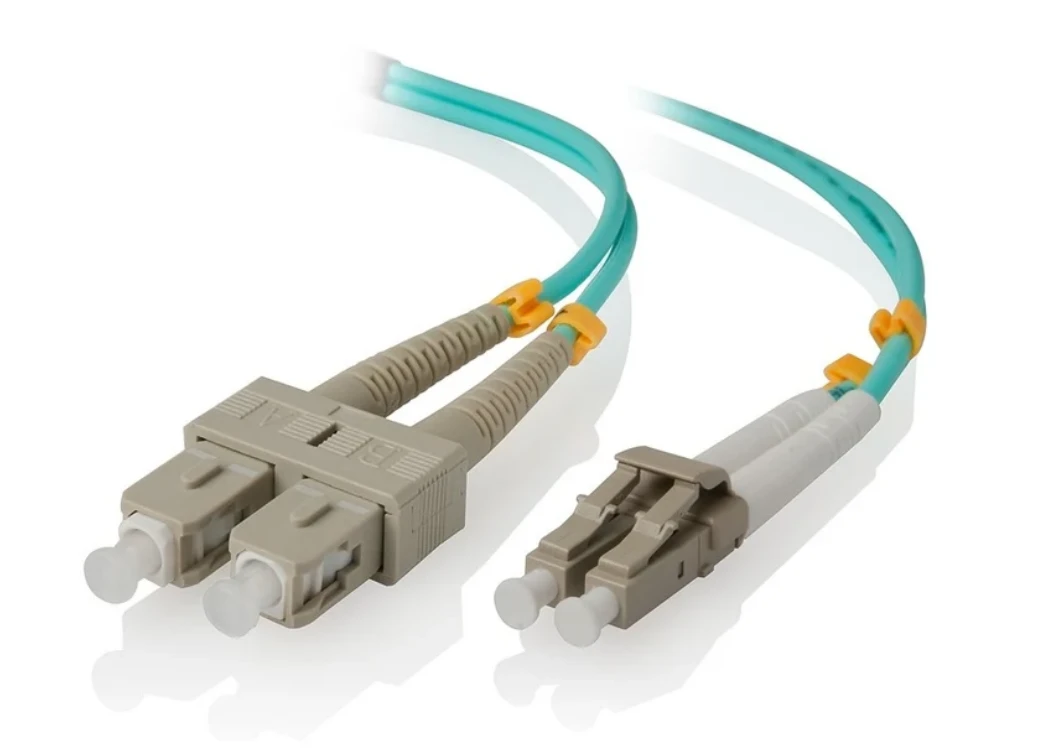
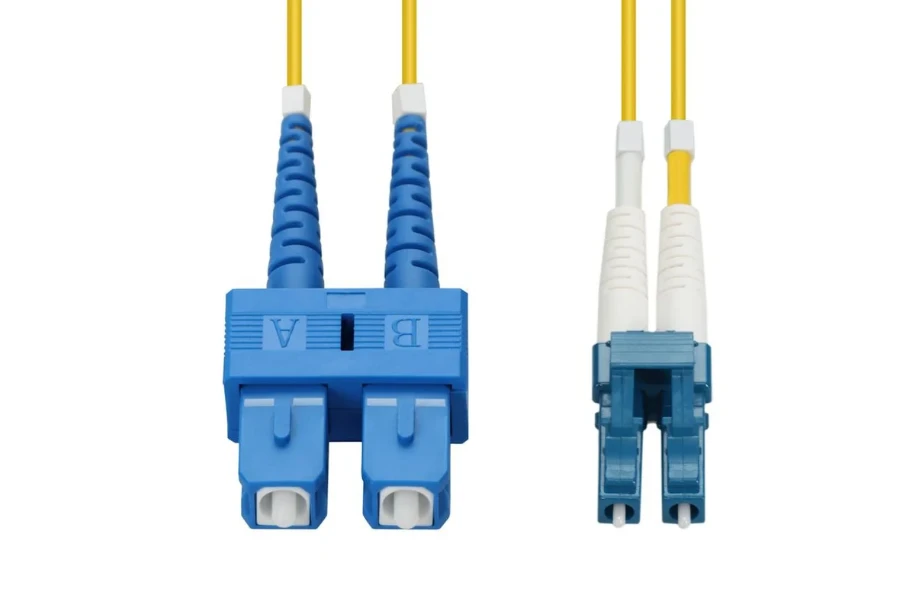
An LC to SC fibre cable is a type of fiber optic patch cord terminated with an LC connector on one end and an SC connector on the other. It serves as a critical transitional cabling component to connect mismatched fiber interfaces in integrated network systems.
The two connectors feature distinct structural designs and application positioning:
LC Connector (Lucent Connector): Equipped with a 1.25mm miniature ceramic ferrule and latch-lock structure. It features ultra-small size and high density, widely applied in SFP/SFP+ transceivers, gigabit/10G switch ports, and high-density data center cabling systems.
SC Connector (Subscriber Connector): Adopts a 2.5mm ceramic ferrule and push-pull locking design. With sturdy structure and easy operation, it is the mainstream connector for traditional optical distribution frames (ODF), fiber patch panels, and legacy building network cabling systems.
By combining these two mainstream connectors, the LC to SC fiber cable perfectly connects new-generation LC-based network devices with traditional SC-based cabling infrastructure, avoiding costly overall network replacement and maximizing the utilization of existing network resources.
Core Types of LC to SC Fibre Cables
We customize and supply full-spec LC to SC fibre cables to meet different transmission distance, speed, and environmental requirements, mainly divided into the following categories:
1. Single Mode LC to SC Fibre Cable (OS1/OS2)
Single-mode LC-SC fiber cables adopt 9/125μm fiber core, supporting long-distance, low-loss data transmission. OS2-grade single-mode cables are compliant with international telecom standards, with extremely low insertion loss and return loss. They are ideal for long-distance networking, campus backbone cabling, telecom room interconnection, and cross-floor network links, supporting 1G/10G/40G high-speed Ethernet transmission.
2. Multimode LC to SC Fibre Cable (OM1/OM3/OM4)
Multimode LC to SC fibre cables use 50/125μm or 62.5/125μm fiber cores, suitable for short and medium-distance high-speed transmission. OM3 and OM4 enhanced multimode cables perfectly support 10G Ethernet, commonly used for data center internal device connection, server room short-distance wiring, and enterprise office network terminal connection, with stable signal transmission and strong anti-interference ability.
3. Simplex & Duplex LC to SC Fibre Cable
Simplex cables are used for single-channel signal transmission, applicable to simple point-to-point optical links; duplex LC to SC fibre cables adopt paired fiber design, supporting full-duplex transceiver signal transmission, which is the mainstream choice for switch, transceiver, and router fiber connection scenarios.
Key Advantages of Our LC to SC Fibre Cable
As a professional fiber optic cable manufacturer, our LC to SC fibre patch cables stand out in the market with strict quality control and optimized structural design, bringing multiple core benefits for network deployment:
Ultra-Low Signal Loss: Adopts high-precision zirconia ceramic ferrules and factory-precision polishing (UPC/APC optional), with stable insertion loss and return loss indicators, effectively avoiding signal attenuation and ensuring zero packet loss in high-speed transmission.
Excellent Compatibility: Fully compatible with all mainstream brand switches, transceivers, ODF frames, patch panels, and optical network terminals, realizing plug-and-play without network adaptation failure.
Superior Durability: The cable jacket uses LSZH flame-retardant material, which is fire-resistant, low-smoke, non-toxic, and anti-aging. It can adapt to complex indoor and weak current machine room environments. The connector plugging life exceeds 1000 times, meeting long-term commercial use needs.
High Installation Flexibility: Supports customized lengths from 0.5m to 100m, with flexible bending performance, suitable for narrow wiring spaces such as equipment cabinets and cable trenches.
Cost-Effective Network Upgrade: Effectively solve the compatibility problem between new LC devices and old SC cabling systems, helping enterprises complete network iteration at low cost and avoid resource waste.
Common Applications of LC to SC Fibre Cable
The versatile LC to SC fibre cable covers almost all mainstream optical fiber networking scenarios, becoming an essential cabling accessory for network construction and maintenance:
Data Center Cabling: Connect SFP transceivers, core switches, and SC fiber patch panels to build high-density, high-speed data transmission links.
Enterprise Office Networks: Used for campus network, office building floor-by-floor network interconnection, solving interface mismatch in old and new network equipment replacement.
Telecom & ISP Infrastructure: Applied to telecom computer rooms, optical fiber communication base stations, and broadband access network wiring to ensure stable long-distance signal transmission.
Smart Building & Industrial Networking: Adapt to weak current wiring of smart buildings, monitoring network transmission, and industrial automation optical link connection, with strong environmental adaptability.
How to Choose the Right LC to SC Fibre Cable?
To ensure network stability and transmission efficiency, you need to select a suitable LC to SC fibre cable according to actual usage scenarios. Here are key selection tips:
Confirm Fiber Mode: Choose OS2 single-mode cable for long-distance (over 5km) transmission; select OM3/OM4 multimode cable for short-distance (within 550m) 10G high-speed networking.
Select Polishing Type: UPC polishing is suitable for most commercial network scenarios with low loss requirements; APC polishing is preferred for passive optical networks (PON) and high-precision communication scenarios to achieve lower return loss.
Determine Cable Structure: Choose duplex cables for network device data transceiver; simplex cables for simple unidirectional signal transmission.
Match Length & Jacket: Select the appropriate cable length according to wiring distance; choose LSZH flame-retardant jacket for closed machine rooms and public building environments to meet safety standards.
Why Choose Our LC to SC Fibre Cable?
We focus on the R&D, production and sales of high-quality fiber optic cables and network cabling accessories. All our LC to SC fibre cables pass strict optical performance testing and quality inspection, with reliable quality and stable performance. We support OEM/ODM customization, provide diverse specifications, fast delivery, and professional after-sales technical support.
Whether you need bulk wholesale for engineering projects or small-batch customized patch cords for daily maintenance, we can provide cost-effective one-stop cabling solutions to help you build efficient, stable, and long-lasting optical fiber network systems.
FAQs About LC to SC Fibre Cable
1. Can LC to SC fibre cable support 10G network transmission?
Yes. OM3/OM4 multimode and OS2 single-mode LC-SC fiber cables can stably support 10G Ethernet transmission, meeting the needs of mainstream high-speed enterprise networks and data centers.
2. What is the difference between LC to SC and SC to LC fiber cable?
There is no essential difference in performance. The two only differ in the order of connector ends, and both support bidirectional signal transmission, which can be used interchangeably in most networking scenarios.
3. Is single-mode or multimode LC to SC fibre cable better?
It depends on the transmission distance. Single-mode is suitable for long-distance, ultra-high-speed transmission; multimode is more cost-effective for short-distance indoor high-speed wiring.